
Every few years, a Himalayan valley makes the jump from "unheard of" to "everyone's Instagram grid." Spiti did it. Increasingly, so is Tirthan. Pangi hasn't — and talking to the people building tourism here, that seems to be by design as much as by geography.
A valley that closes for half the year
Pangi is cut off from the rest of Himachal for six to eight months every winter. Sach Pass, one of only two road routes in, is only open roughly June to September. That's not a footnote — it's the reason Pangi still feels the way valleys like Spiti did fifteen years ago. There's no year-round tourism economy here yet, no strip of guesthouses competing for the same three viewpoints. What tourism exists has had to be deliberate.
Five sub-valleys, five different characters
Pangi isn't one place. It's five distinct sub-valleys, each shaped by its own geography and history:
- Chanderbhaga, the valley floor along the Chandrabhaga river, running through Killar — the closest thing Pangi has to a town centre.
- Sural, framed by snow on both sides, with a monastery built recently enough that it's still new to most maps.
- Kumar Parmar, home to a weaver's society keeping local textile craft alive.
- Sechu, sitting on the edge of the Sechu Tuwan core zone — the pick if wildlife is what draws you to mountains in the first place.
- Chasak Bhatori, one of the valley's oldest-settled corners, where homes are still built kotha-style from stone, wood and mud.
A sixth, Hudan, sits further out — known locally for views of Shiva Peak and a mythology-rich landscape that hasn't yet found its way onto a single booking page. That's not a gap in the tourism product. That's just how much of Pangi hasn't been packaged yet.
Adventure tourism, still in its early days
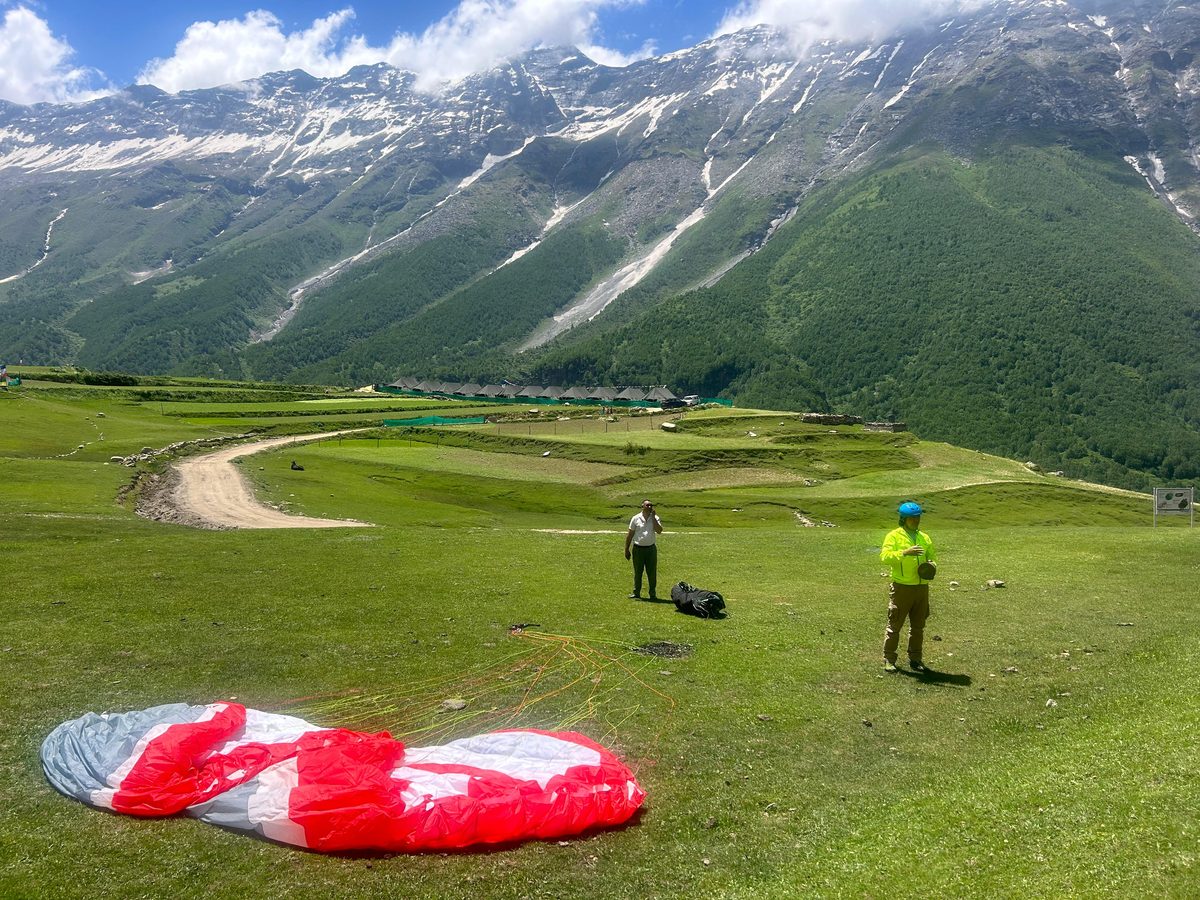
Paragliding trials began in Pangi only recently — early flights over wide riverbeds and green valley floors, run with a safety-first approach rather than a rush to scale. If you're the kind of traveller who wants to see a place before the adventure-sports operators arrive in force, this is close to as early as it gets.
Pangi versus Spiti: not a competition
Ask anyone involved in building Pangi's tourism model and they'll tell you they looked at Spiti deliberately — homestay owners from Pangi travelled there on an exposure visit, studying how an established community-tourism model manages guests, pricing, and seasonal planning. The goal wasn't to copy it. It was to take what works and adapt it to a valley that's earlier in its journey, with fewer rooms, fewer roads, and considerably more silence.
Spiti offers more accessible infrastructure. Pangi offers what Spiti offered before the infrastructure arrived.
A living culture, not a backdrop
The villages here aren't staged for visitors. Homestay hosts are weavers, farmers, and former headmasters as much as they are hosts — Nilay Homestay's Prem Singh ji runs Kumar's weaver's society on the side; Kailash Pati Homestay's Thakur Dass is a retired headmaster known locally as a storyteller of the valley's past. Staying with them means the culture isn't a stop on an itinerary. It's who you're having dinner with.
See who's actually hosting
Twelve homestays, five clusters, real people behind every listing.
Browse Pangi Valley homestays →