
By Pangi Tourism's own description, it's "a collaboration of two strategic partners: CEVA, a local organisation that works to promote livelihood among the indigenous community, and GroundUp Conservation, a consulting firm that supports grassroots organisations scale up their successes." That sentence does a lot of quiet work. It means the homestays listed on this site aren't a travel product built by a tourism company and pointed at a scenic valley — they're one output of a longer-running partnership between two organisations whose actual job is community development.
Two partners, two different jobs
CEVA — Collective Efforts for Voluntary Action — is a Western Himalayan NGO working at the grassroots level with Indigenous communities, focused on food security, women's empowerment, and livelihood generation through sustainable use of natural resources. CEVA is the organisation on the ground in Pangi day to day.
GroundUp Conservation works with grassroots and Indigenous communities across India, Papua New Guinea, Kenya and Nagaland, putting the practice of landscape restoration and livelihood-building directly into local hands. Eco-tourism is one of three enterprise areas GroundUp incubates, alongside nature-positive products and landscape restoration — and Pangi Tourism is one of the community-led enterprises in that portfolio.
In practice: CEVA knows the valley and its people. GroundUp brings the strategy, structure, and scale-up thinking. Neither could have built this alone.
What "consulting firm" looks like on the ground
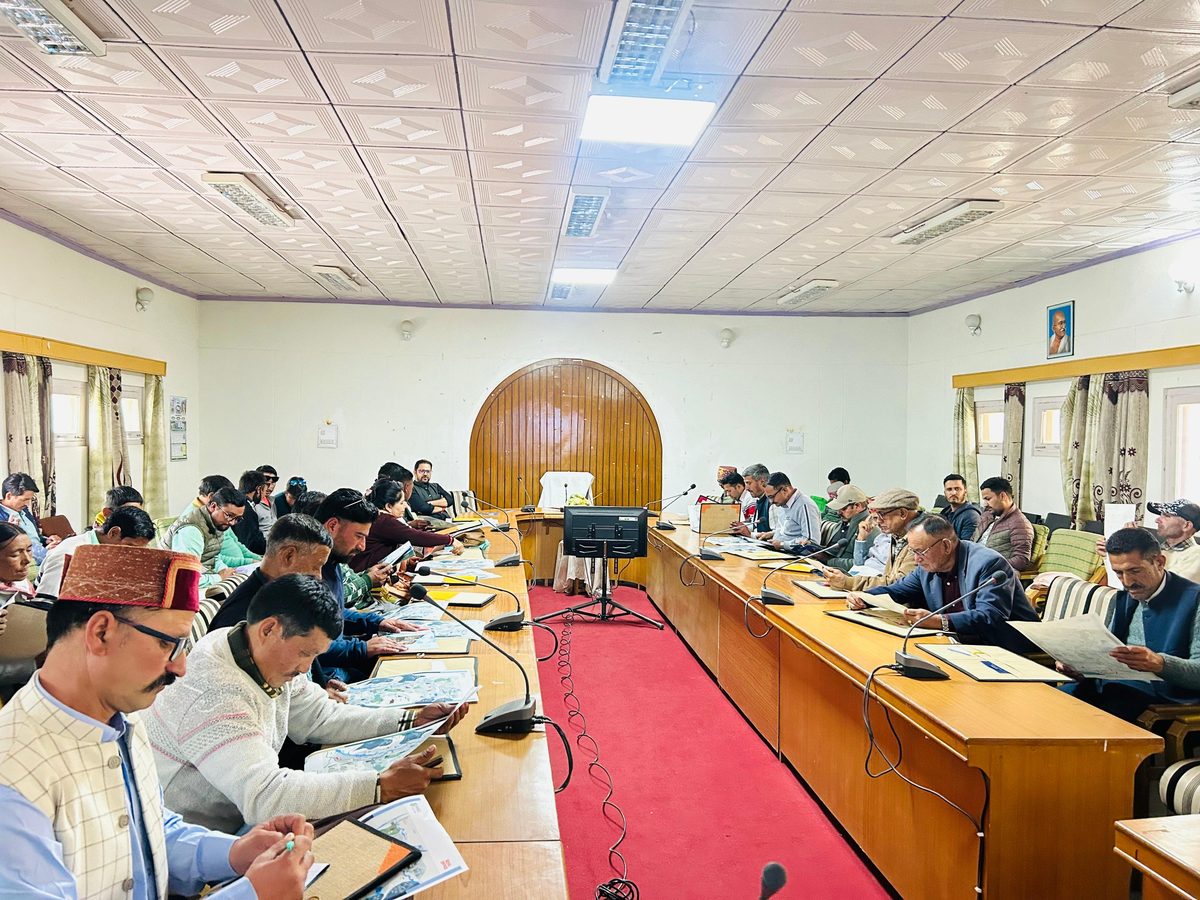
A lot of what this partnership actually does is unglamorous by design. A consultation workshop earlier this year brought local stakeholders together in Killar — village representatives, homestay hosts, local officials — to work through a practical roadmap for growing tourism responsibly: homestay support, better visibility, staying offbeat rather than overexposed. It's the kind of meeting that doesn't photograph as well as a mountain pass, but it's most of the actual work.
Learning from a valley that got there first
Rather than guessing at what works, homestay owners from Pangi travelled to Spiti Valley on an exposure visit — sitting with hosts who'd already built a functioning community-tourism model, learning how they handle guest experience, pricing, and seasonal planning firsthand. They came back with ideas adapted to Pangi's own context, not a copy of someone else's.
Building carefully, not quickly
The same pattern shows up in how adventure tourism is being introduced. Early paragliding trials in Pangi have been run with a safety-first approach — testing the ground before opening it up, rather than marketing an activity before it's ready. It's a small detail, but it's consistent with everything else about how this partnership operates: slower than a pure tourism business might move, and more accountable to the people who actually live here.
Why that matters for who you're booking with
Every homestay listed on this site is run directly by a family in the village — not by an agent, and not by a platform taking a cut. GroundUp's role is to help that reach more travellers; CEVA's is to make sure it stays rooted in the community it's meant to serve. Some real numbers behind that work, network-wide: 2,670 hectares under landscape management, 17,134 livelihood days generated, 11 grassroots partners across GroundUp's broader portfolio.
Booking a homestay here isn't just picking a place to sleep. It's a small part of how that model gets to keep working.
Meet the hosts behind it
Twelve homestays, five clusters, all run directly by the families who live there.
Browse Pangi Valley homestays →